
 Call a Friend
 Create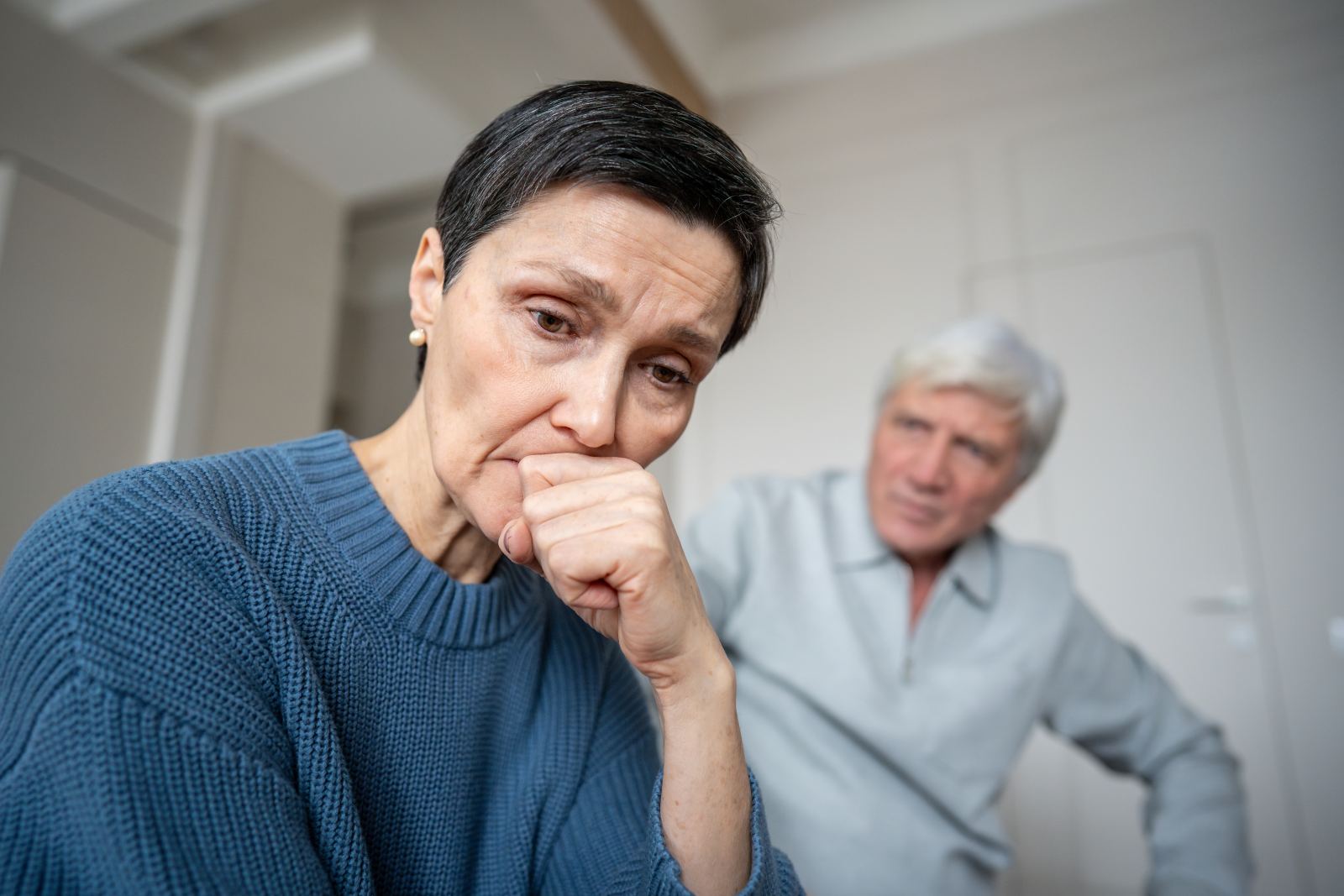
Sometimes couples stop arguing because they have resolved their differences. Sometimes they stop because one of them has stopped trying. Relationship research suggests the difference may matter more than the silence itself.
There is a particular kind of relationship difficulty that can be surprisingly difficult to see.
There may be no dramatic arguments. No slammed doors. No revelation of an affair. No announcement that someone wants to leave.
From the outside, the marriage may appear perfectly functional.
Two people still share a home. They discuss bills and groceries. They attend family occasions. They may sleep in the same bed and ask each other what time they will be home.
And yet something important has slowly disappeared.
They no longer tell each other very much.
Curiosity has faded. Affection has become less frequent. Difficult conversations are avoided rather than resolved. One or both partners may gradually expect less from the relationship.
Recently, this has sometimes been described as “quiet quitting” a marriage.
It is a memorable phrase.
But it isn't a clinical diagnosis, nor is it an established scientific term.
Relationship researchers have been studying something considerably more interesting for decades: emotional disengagement.
And what that research suggests is that the opposite of a healthy marriage may not always be a marriage filled with conflict.
Sometimes it is one in which very little seems to be happening at all.
What Does Emotional Disengagement Actually Mean?
Researchers studying romantic disengagement have described several overlapping features: declining positive feelings toward a partner, emotional indifference, reduced interest in the relationship, and behaviors that increase psychological or physical distance.
That distinction is important.
A person can be angry with a spouse and still be deeply emotionally invested in the marriage.
Indeed, an argument can sometimes represent an attempt—however imperfect—to be heard, understood or to change something that matters.
Indifference is different.
In research on romantic disengagement, people may begin expecting less from their partner, withdrawing emotionally or feeling increasingly separate despite remaining together.
It isn't necessarily hostility.
Sometimes it is simply less.
Less curiosity.
Less affection.
Less disclosure.
Less laughter.
Less effort to repair misunderstandings.
And eventually, perhaps, less expectation that the other person will provide emotional connection at all.
When the Arguments Stop
It is tempting to assume that couples who rarely argue must have good relationships.
The research is more complicated.
In a classic longitudinal study, psychologists John Gottman and Lowell Krokoff observed couples discussing areas of disagreement and then followed changes in marital satisfaction.
Some behaviors we might instinctively regard as negative—including disagreement and expressions of anger—were not necessarily associated with long-term deterioration.
Withdrawal was different.
Withdrawal from interaction was among the behaviors associated with declining marital satisfaction over time.
That does not mean couples should argue more.
It means that conflict and disengagement are not the same thing.
A couple who can disagree, listen, repair the disagreement and remain emotionally connected may be in a very different position from a couple who rarely argues because neither person believes discussion will accomplish anything.
The silence can look similar.
Its meaning may be entirely different.
The Slow Divorce
One of the most intriguing findings comes from long-term research by Gottman and psychologist Robert Levenson.
Following couples over 14 years, they found that different interaction patterns appeared to be associated with divorce at different stages.
Highly negative emotional exchanges were associated with earlier divorce.
But a lack of positive emotion during ordinary conversations and conflict discussions was associated with divorce later in marriage.
This is worth thinking about.
Some marriages may deteriorate loudly.
Others may deteriorate quietly.
The second kind can potentially continue for years because the household itself still functions.
There may be companionship, financial interdependence, children, grandchildren, shared history and familiar routines holding two lives together.
What has weakened is not necessarily the partnership as a practical arrangement.
It is the emotional relationship within it.
The Demand-Withdraw Trap
Another extensively studied relationship pattern is known as demand-withdraw communication.
One partner wants to discuss a problem, asks for change or pushes for greater engagement.
The other avoids the conversation, becomes defensive, changes the subject or withdraws.
That withdrawal can then make the first partner push harder.
The additional pressure may make the second partner withdraw further.
A cycle develops.
Research has repeatedly associated demand-withdraw patterns with relationship distress and, in some longitudinal studies, declining marital satisfaction.
But here too, caution is necessary.
More recent research suggests that withdrawal does not mean exactly the same thing in every relationship.
A large observational study found that the consequences of demand-withdraw communication varied according to couples' social and economic circumstances. Under conditions where couples had fewer resources to solve the problems being discussed, withdrawal sometimes functioned differently from the pattern observed among more advantaged couples.
Human relationships rarely fit neatly into a checklist.
Sometimes Withdrawal Is Just Exhaustion
There is another reason to be careful about labels.
People withdraw for many reasons.
Work can become overwhelming.
Someone may be caring for an elderly parent.
Financial pressure can dominate a household.
Children can consume enormous amounts of emotional energy.
Grief, illness, sleep deprivation and major life transitions can temporarily change the way people communicate.
And people sometimes need space after conflict before they are capable of having a constructive conversation.
A period of reduced emotional availability therefore does not necessarily mean someone has “checked out” of a marriage.
The more useful question may be whether the distance has become persistent and characteristic of the relationship.
Has a temporary quiet period gradually become the normal way the couple lives?
The Parallel-Lives Marriage
Perhaps the most revealing sign of emotional distance is not how often two people argue, but how much of their inner lives they still share.
Think about the ordinary things.
Something amusing happens during the day.
Who do you want to tell?
You are worried about something.
Whose perspective do you seek?
Something unexpectedly good happens.
Who is the person you instinctively want to call?
Researchers use the concept of perceived partner responsiveness to describe the feeling that a partner understands, appreciates and cares for us.
In a large study following married adults over a decade, greater perceived partner responsiveness predicted higher levels of an important dimension of psychological wellbeing years later.
It points toward something easily overlooked.
Emotional intimacy is built not only during romantic holidays or profound conversations.
Much of it develops through thousands of very ordinary interactions in which another person communicates:
I see you.
I'm interested.
What happens to you matters to me.
When those interactions gradually disappear, two people can continue sharing a life while sharing less and less of themselves.
Growing Older Together Changes the Picture
This issue may be particularly relevant in long marriages.
Researchers who followed middle-aged and older couples for 13 years found changes in how couples handled conflict as they aged, including increases in avoidance behavior.
But avoidance itself should not automatically be interpreted as marital deterioration.
Older couples may become better at deciding which disagreements simply aren't worth pursuing.
After decades together, not every irritation requires resolution.
That can be wisdom rather than disengagement.
The important distinction may therefore be between letting go of unnecessary conflict and letting go of each other.
One creates peace.
The other creates distance.
Can an Emotionally Distant Marriage Recover?
There is encouraging evidence here too.
Relationship distress is not necessarily irreversible.
A meta-analysis covering 58 studies and more than 2,000 couples found that couple therapy produced substantial improvements in relationship satisfaction and also affected communication, emotional intimacy and partner behavior.
Another review concluded that behavioral and emotion-focused approaches benefit a substantial proportion of distressed couples, while also cautioning that treatment effects can weaken over time and that results in everyday clinical practice may be less impressive than those achieved in controlled studies.
And a five-year follow-up of 134 seriously and chronically distressed married couples who received behavioral couple therapies found clinically significant improvement in roughly half of couples, although approximately one quarter were separated or divorced by the five-year follow-up.
So the evidence offers neither a miracle cure nor a reason for hopelessness.
Relationships can change.
But change generally requires engagement.
And perhaps that is the crucial difference between conflict and emotional disengagement.
Two people arguing may still be trying to reach one another.
The greater danger may come when neither believes reaching is worthwhile anymore.
Before Calling It “Quiet Quitting”
Popular relationship terminology can sometimes make complicated human behavior sound deceptively simple.
A spouse who seems distant may not be secretly planning an exit.
A couple who has stopped arguing may have matured.
Two people who enjoy independent interests may have an exceptionally secure relationship.
And temporary withdrawal during stressful periods can be entirely understandable.
Rather than asking whether a spouse displays a particular number of “warning signs,” a more useful conversation might begin with something gentler:
Do we still feel emotionally connected?
Do we still know what is happening inside each other's lives?
When something matters, do we still turn toward each other?
And if we have drifted apart, do we both want to find our way back?
Those questions cannot diagnose a marriage.
But they may help start a conversation that has been missing.
Lydia's™ Take
There is something reassuring about a peaceful marriage.
After years together, love does not need to be dramatic to be real. Comfortable silence, separate interests and familiar routines can all be signs of security rather than distance.
But peace and indifference are not the same thing.
Perhaps the question is not whether couples still disagree.
It is whether they are still interested in each other.
Relationships are built from surprisingly small moments: asking another question, sharing something insignificant, reaching across the table, laughing about something nobody else would understand.
A marriage rarely exists only in its anniversaries and crises.
Most of it happens on ordinary Tuesdays.
And perhaps that is also where two people notice whether they are still finding one another.
Editorial Note
This article discusses relationship research for general informational purposes. Emotional distance, conflict and withdrawal can have many causes, and research findings about groups of couples cannot determine the condition or future of an individual relationship. Couples experiencing persistent relationship distress may wish to consult a qualified couples therapist or other appropriately credentialed mental-health professional.
If a relationship involves coercion, threats, intimidation or physical violence, the issues are different from ordinary relationship disengagement and should not be approached simply as a communication problem.
Research & Trusted Sources
Gottman, J. M. & Krokoff, L. J. (1989). Marital interaction and satisfaction: A longitudinal view. Journal of Consulting and Clinical Psychology. The longitudinal study identified withdrawal among interaction patterns associated with deterioration in marital satisfaction.
PubMed — Gottman & Krokoff study
Gottman, J. M. & Levenson, R. W. (2000). The Timing of Divorce: Predicting When a Couple Will Divorce Over a 14-Year Period. Journal of Marriage and Family. The study found different patterns associated with earlier versus later divorce, including lack of positive affect as a predictor of later dissolution.
Journal of Marriage and Family — 14-year longitudinal study
Gottman, J. M. & Levenson, R. W. (2002). A two-factor model for predicting when a couple will divorce: exploratory analyses using 14-year longitudinal data. Family Process.
PubMed — Gottman & Levenson study
Barry, R. A., Lawrence, E. & Langer, A. (2008). Conceptualization and Assessment of Disengagement in Romantic Relationships. Personal Relationships. Provides a research framework for romantic disengagement incorporating emotional indifference and relational distancing.
PubMed Central — Romantic Disengagement study
Birditt, K. S. et al. Marital Conflict Behaviors and Implications for Divorce over 16 Years. Examined conflict behaviors in 373 couples over an extended longitudinal period and discusses evidence linking withdrawal patterns with subsequent relationship outcomes, while also noting contradictory findings in the literature.
PubMed Central — 16-year marital conflict study
Selçuk, E., Günaydin, G., Ong, A. D. & Almeida, D. M. (2016). Does Partner Responsiveness Predict Hedonic and Eudaimonic Well-Being? A 10-Year Longitudinal Study. Examined more than 2,000 married adults and the long-term relationship between feeling understood, cared for and appreciated by one's partner and wellbeing.
PubMed Central — Partner Responsiveness study
Roddy, M. K. et al. (2020). Meta-analysis of couple therapy: Effects across outcomes, designs, timeframes, and other moderators. Journal of Consulting and Clinical Psychology. The analysis included 58 studies representing 2,092 couples and found substantial effects of couple therapy on relationship satisfaction as well as improvements in communication and emotional intimacy.