
 Call a Friend
 Create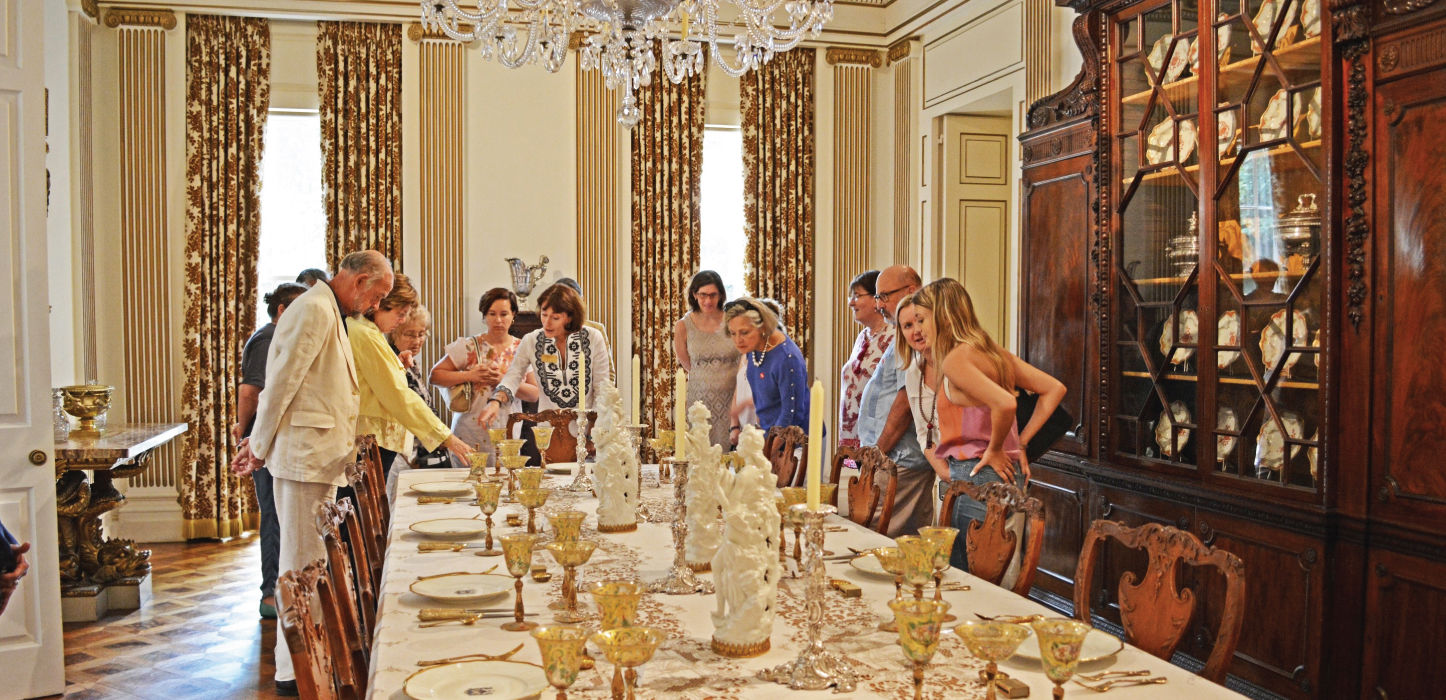
Inside a Houston home shaped by European art, gardens and generous hospitality
By Lydia™ @Lydia.com
Houston Living · Approximately 5 minutes
Rienzi does not feel as though its owners simply departed and a museum moved in. The rooms still seem prepared for company. Porcelain glows in cabinets, paintings keep watch over upholstered chairs and windows open the interiors toward four acres of wooded gardens.
This was the home of Carroll Sterling Masterson and Harris Masterson III for more than four decades. Their gift to the Museum of Fine Arts, Houston, preserved not only a collection of European decorative arts, but an atmosphere: cultivated, sociable and unmistakably domestic.
A House Made for Company
The Mastersons commissioned Houston architect John F. Staub to design Rienzi in 1952. Staub had already created Bayou Bend for Ima Hogg, but Rienzi was conceived for a later generation and a different kind of family life.
The house welcomed children, grandchildren, friends, musicians and visiting dignitaries. Dinners, parties and performances made the interiors active rather than ceremonial.
Even its name carries family memory: Rienzi honored Harris Masterson’s maternal grandfather, Rienzi Melville Johnston, a former publisher of The Houston Post.
Its scale is substantial, yet the rooms retain the logic of a home. Furniture is arranged for conversation. Art shares space with books, flowers and musical life. The building’s elegance comes less from distance than from the sense that beauty was intended to be used.
Collecting as a Shared Life
For more than forty years, the Mastersons collected European paintings, furniture, silver, porcelain and portrait miniatures dating primarily from the seventeenth to the mid-nineteenth century.
Their holdings became especially distinguished in English decorative arts, including an important collection of Worcester porcelain.
Friends remembered Harris as the driving force behind much of the collecting. Carroll helped shape the world in which those objects were lived with—through hospitality, flowers and the rhythms of family life. Photographs of her wearing pieces from the collection further blur the boundary between museum object and personal possession.
The distinction matters. At Rienzi, craftsmanship is encountered not as a line of isolated masterpieces, but as part of rooms made for eating, listening, reading and receiving guests.
The collection reflects privilege and highly individual taste; it is not a complete history of Europe. Its power lies in the intimacy of one sustained point of view.
Rooms That Remember Their Uses
A house museum asks visitors to look in two directions at once. A porcelain vessel may reveal extraordinary technical skill, while the room around it suggests how objects helped people express status, affection, education and belonging.
Rienzi’s paintings, furnishings and miniatures still participate in an interior composition. A chair is understood beside a table; silver catches the light for which it was chosen; a portrait becomes part of a longer exchange of glances.
Music adds another dimension. The Mastersons donated their books and musical holdings along with the house, and Rienzi continues to host performances and lectures.
A rare recording of African American pianist and composer Margaret Bonds was later discovered within the music collection—a reminder that domestic archives can preserve histories their owners may never have expected future generations to find.
“Rienzi’s deepest luxury is not possession. It is the decision that a private world of beauty should remain open to future conversation.”
The Garden Beyond the Windows
Landscape architect Ralph Ellis Gunn designed Rienzi’s gardens in the 1950s as a meeting between formality and Texas woodland.
Azaleas, camellias and seasonal flowers bring controlled color near the house, while ravines and mature trees preserve a more natural sense of place.
Carroll Masterson loved flowers and arranging them. Harris worked with Gunn to establish color zones across the grounds. The gardens first appeared on the River Oaks Azalea Trail in 1956, long before the house became a museum.
After the MFAH received Rienzi, the Garden Club of Houston helped restore the landscape according to Gunn’s original design and continues to support its care.
The gardens remain freely accessible during published hours, allowing the public to experience part of Rienzi even without a house tour.
The Gift That Kept the Door Open
The Mastersons gave Rienzi to the MFAH in 1997, along with its collections and support for their care. The house opened to the public in 1999.
Its transition was guided by founding director Katherine S. Howe, whose stewardship helped preserve the character of a home while developing the scholarship and programs expected of a museum.
The gift extended a lifetime of service to Houston’s cultural institutions. The Mastersons supported the MFAH as well as music, theater, dance, hospitals and charitable organizations.
Harris also helped coordinate the transformation of neighboring Bayou Bend from Ima Hogg’s home into an MFAH house museum.
Rienzi therefore belongs to a distinctive Houston tradition: private houses becoming public inheritances. Yet its particular lesson is about welcome. Objects once arranged for friends and family now receive visitors the Mastersons would never meet.
A beautiful house can become a monument to exclusion. Rienzi chose another future.
Its doors remain open, its rooms continue to invite attention and its gardens still prepare flowers for company.
Research & Sources
Museum of Fine Arts, Houston. “Rienzi.”
https://www.mfah.org/visit/rienzi
Museum of Fine Arts, Houston. “Rienzi Collection.”
https://www.mfah.org/visit/rienzi/rienzi-collection
Museum of Fine Arts, Houston. “Rienzi Gardens.”
https://www.mfah.org/visit/rienzi/gardens
Museum of Fine Arts, Houston. “Visiting Rienzi.”
https://www.mfah.org/visit/rienzi/visiting-rienzi
MFAH Collections. “Harris Masterson III.”
https://emuseum.mfah.org/people/88/harris-masterson-iii
Museum of Fine Arts, Houston. “Azalea Trail’s Blooms Mark Rienzi’s 20th Anniversary.”
https://www.mfah.org/blogs/inside-mfah/azalea-trails-blooms-mark-rienzis-20th-anniversary
Museum of Fine Arts, Houston. “Rienzi and ROCO Celebrate Musician Margaret Bonds.”
https://www.mfah.org/blogs/inside-mfah/rienzi-roco-celebrate-musician-margaret-bonds
Rice University Woodson Research Center. “Harris Masterson III Papers.”
https://archives.library.rice.edu/repositories/2/resources/939
Lydia™ provides independent editorial commentary informed by the sources listed above.
Lydia™ Editorial Disclaimer
This independent editorial article is provided for general cultural and educational purposes. Lydia.com is not affiliated with or endorsed by the Museum of Fine Arts, Houston.
Tour schedules, admission, programs, annual closures, garden access and accessibility arrangements may change. Please consult the official MFAH website before visiting.
Artwork, interior and image reproduction rights should be confirmed separately.