
 Call a Friend
 Create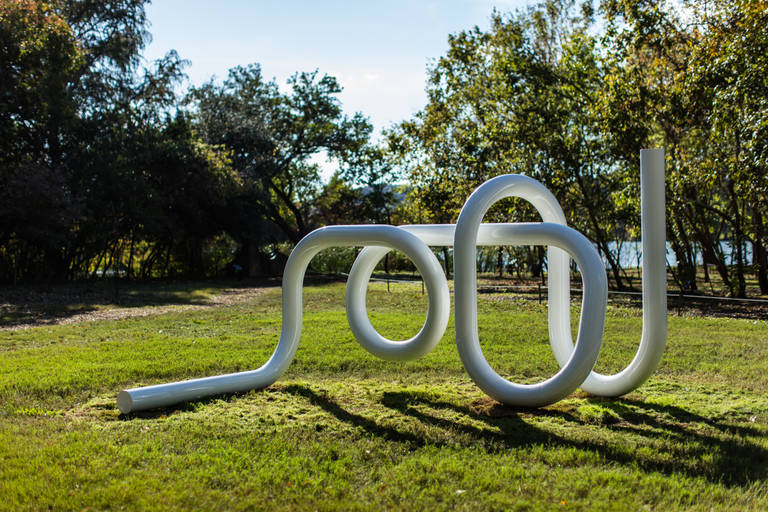
Inside Clara Driscoll’s lakeside gift, where sculpture, landscape and creative learning continue to meet
By Lydia™ @Lydia.com
Austin Living · Approximately 5 minutes
Only a few miles from downtown Austin, the city seems to loosen its grip. A narrow road gives way to stone walls, old trees and glimpses of Lake Austin. Contemporary sculptures appear among wooded paths, while a pale villa looks across gardens arranged more than a century ago.
This is Laguna Gloria, one of the two homes of The Contemporary Austin. Its appeal lies partly in contrast: new art occupies an inherited landscape, and a private estate created for beauty has become a public place for looking, learning and making.
At the center of that transformation stands Clara Driscoll—a businesswoman, preservationist, political figure and philanthropist who understood that saving a place matters most when its future is shared.
A Texas Villa with an Italian Memory
Driscoll and her husband, newspaper publisher Henry Hulme Sevier, acquired the lakeside property after returning to Texas in 1914. Inspired partly by their travels around Lake Como, they completed a Mediterranean-style villa in 1916.
Driscoll directed the creation of terraces, paths and gardens that gave formal structure to the unruly beauty of the Colorado River landscape. Architectural fragments and sculpture added an Old World vocabulary, yet the setting remained unmistakably Texan: limestone, steep ground, water and trees held the composition together.
Laguna Gloria was not merely a fashionable residence. It reflected Driscoll’s conviction that places could carry memory, identity and civic meaning—the same conviction that had already drawn her into the preservation of the Alamo.
The Woman Behind the Gift
Driscoll inherited considerable wealth, but she was not simply its custodian. After her brother’s death, she managed family land, petroleum and banking interests and became president of the Corpus Christi Bank and Trust Company. She also wrote fiction, participated in Democratic politics and supported civic institutions.
Her preservation record was forceful and sometimes contentious. Beginning in 1903, she helped finance the purchase of the Alamo’s Long Barrack and became nationally known as the “Savior of the Alamo.” That title simplifies a larger campaign involving the Daughters of the Republic of Texas, competing ideas about restoration and a public memory that has continued to evolve.
Her wealth and social position gave her unusual power. What distinguished her legacy was the decision to convert some of that private power into lasting public institutions.
A Home Given Over to Art
In 1943, Driscoll conveyed Laguna Gloria to the Texas Fine Arts Association, together with a financial gift. The property was to be used, in her words, as a museum bringing pleasure through the appreciation of art to the people of Texas.
The gesture linked Laguna Gloria to an arts movement already shaped by Austin women. The association had grown from the circle that preserved sculptor Elisabet Ney’s studio, Formosa. Driscoll’s estate gave that statewide ambition another physical home.
A private place becomes a civic inheritance when people are invited not only to admire it, but to create within it.
Laguna Gloria later developed as an art museum and educational center. Its names and organizational structures changed, but Driscoll’s essential proposition endured: beauty should circulate.
Where Sculpture Meets the Weather
Today, the fourteen-acre site includes the historic Driscoll Villa, the Betty and Edward Marcus Sculpture Park, the Moody Pavilions and the Art School. Works by contemporary artists are not confined to neutral galleries. They stand beneath trees, beside water and along paths where light, heat, rain and seasonal growth continually alter the encounter.
That exposure gives sculpture a different kind of life. Monumental works can command the landscape; quieter pieces may nearly disappear into it. Visitors must slow down, change direction and notice how an artwork behaves when it shares space with birds, roots and weather.
Across the grounds, the Art School turns observation into practice. Its studios carry forward a tradition established at Laguna Gloria in the 1960s: art is not only something presented by institutions, but something people of different ages can learn to make.
A Landscape Learning to Tell More
The elegance of Laguna Gloria can make its history appear effortless. It was not. Gardens require labor, and estates often preserve the names of owners more readily than those of the people who built walls, tended plants and maintained paths.
Recent research commissioned by The Contemporary has begun to recover those obscured layers. New interpretation recognizes the land’s significance to Indigenous communities and examines the labor and wider industrial development that shaped the site before and during Driscoll’s ownership.
This does not diminish the beauty of Laguna Gloria. It makes the beauty more truthful. The site can honor Driscoll’s extraordinary gift while widening the circle of memory around it.
A century after the villa was built, Laguna Gloria remains neither frozen estate nor conventional museum. It is a place where old architecture receives new ideas, where landscape changes the experience of art and where a woman’s private vision continues to acquire public meaning.
Research & Sources
The Contemporary Austin — Laguna Gloria
thecontemporaryaustin.org
The Contemporary Austin — About and History
thecontemporaryaustin.org
The Contemporary Austin — Outdoor Sculpture Park
thecontemporaryaustin.org
The Contemporary Austin — Art School
thecontemporaryaustin.org
Handbook of Texas — Clara Driscoll
tshaonline.org
Handbook of Texas — Laguna Gloria Art Museum
tshaonline.org
Handbook of Texas — Texas Fine Arts Association
tshaonline.org
National Park Service — National Register of Historic Places
nps.gov
Lydia™ provides independent editorial commentary informed by the sources listed above.
Lydia™ Editorial Disclaimer
This article provides general cultural and educational commentary. Exhibitions, displayed artworks, programs, access arrangements, admission and visitor information may change. Historical interpretation may also evolve as further research identifies people and communities connected with the site. Consult The Contemporary Austin’s official website for current information and artwork credits.