
 Call a Friend
 Create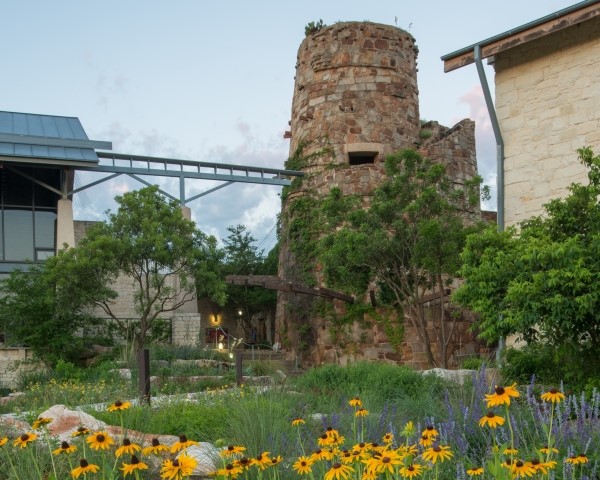
How a love of native plants grew into research, restoration and a distinctly Texan public garden
By Lydia™ @Lydia.com
Austin Living · Approximately 5 minutes
In southwest Austin, limestone paths move between live oaks, prairie grasses, cactus and flowers that answer to the rhythms of Texas rather than the conventions of a formal European garden. The Lady Bird Johnson Wildflower Center is beautiful, but beauty here is never merely decorative.
Across 284 acres, more than 1,000 species of native Texas plants form gardens, woodlands and research landscapes. They also express an argument Lady Bird Johnson spent decades making: the appearance of a place affects how people value it, and care for beauty can become care for the living systems beneath it.
More Than Roadside Flowers
Johnson’s public image remains closely tied to wildflowers along American highways. As first lady, she promoted the Highway Beautification Act of 1965, supported planting and conservation projects in Washington and later helped transform Austin’s neglected Town Lake shoreline.
It is easy to hear “beautification” and imagine a pleasant finishing touch. Johnson meant something more consequential. She connected visual surroundings with dignity, civic pride and quality of life, while arguing that landscapes should retain their regional character.
Her position gave her extraordinary influence, and her language belonged to its era. Yet the work grew beyond appearances. Native plants became a way to discuss habitat, soil, water and the cost of making every landscape look the same.
A Research Center Takes Root
On her seventieth birthday in 1982, Johnson and actress Helen Hayes founded the National Wildflower Research Center. Johnson contributed land and financial support, while Hayes brought her own visibility to a shared conviction that North America’s native plants required study as well as admiration.
The original east Austin site soon proved too small. In 1995, the organization moved to its present home, where gardens and research areas could occupy a larger landscape. It was renamed the Lady Bird Johnson Wildflower Center in 1997 and became part of the University of Texas at Austin in 2006.
That history matters because it resists the myth of the lone visionary. Johnson supplied the spark and public authority; Hayes, scientists, horticulturists, donors, volunteers and university stewardship helped turn conviction into an institution.
A Garden That Belongs to Its Place
The Center sits where the Edwards Plateau meets the Texas Blackland Prairies. Its limestone buildings, courtyards, water features and observation tower do not conceal that setting. They give visitors a sequence of thresholds through which cultivated gardens gradually open into a broader Texas landscape.
Native plants are not simply foreign ornamentals with better manners. They carry relationships developed with local soils, rainfall patterns, insects and wildlife. A garden of them can offer habitat, conserve a region’s botanical identity and reveal that seasonal change is not a design failure.
A native garden does not decorate the land; it helps the land remain recognizably itself.
The result feels distinctly Austin: designed but not over-controlled, educational without losing sensory pleasure. The pleasure is part of the lesson. People protect more readily what they have learned to notice.
Beauty Put to Work
Beyond the public paths, the Center studies how landscapes survive and recover. Long-term work on prescribed fire and land management tests ways to sustain healthy ecosystems, while its plant information resources extend practical knowledge far beyond the grounds.
The Center also helped develop the Sustainable SITES Initiative with the United States Botanic Garden and the American Society of Landscape Architects. That effort established a framework for landscapes that support water, soil, vegetation, human health and responsible maintenance—not only visual effect.
This is where Johnson’s idea reaches its fullest expression. Beauty becomes useful without becoming utilitarian. A meadow can delight the eye while storing knowledge; a garden can welcome people while demonstrating how less extractive landscapes might be designed.
A Legacy Still Growing
In 2017, the Texas Legislature designated the Center the Botanic Garden of Texas. The title recognizes more than size or horticultural variety. It affirms that the state’s own plants are worthy of attention, scholarship and public pride.
That proposition feels increasingly urgent as Austin expands and familiar landscapes give way to development. Native plants cannot solve every pressure created by growth, drought or extreme weather. They can, however, help communities read their surroundings more carefully and make choices grounded in place.
Lady Bird Johnson understood that beauty could open a door through which larger responsibilities might enter. At the Wildflower Center, her legacy is not preserved as a finished bouquet. It remains alive in research plots, restored land and the quiet recognition that belonging begins by noticing what already grows beneath our feet.
Research & Sources
Lady Bird Johnson Wildflower Center — About and Overview
wildflower.org
Lady Bird Johnson Wildflower Center — History
wildflower.org
Lady Bird Johnson Wildflower Center — Facts
wildflower.org
Lady Bird Johnson Wildflower Center — Research
wildflower.org
Lady Bird Johnson Wildflower Center — A Place and a Promise
wildflower.org
Lady Bird Johnson Wildflower Center — Botanic Garden of Texas
wildflower.org
LBJ Presidential Library — Lady Bird Johnson
lbjlibrary.org
The University of Texas at Austin — Lady Bird Johnson Wildflower Center
utexas.edu
Sustainable SITES Initiative — About SITES
sustainablesites.org
Lydia™ provides independent editorial commentary informed by the sources listed above.
Lydia™ Editorial Disclaimer
This article provides general cultural and educational commentary. Plant collections, exhibitions, programs, access arrangements and visitor information may change. Ecological and horticultural outcomes vary by place and conditions. Consult the Lady Bird Johnson Wildflower Center’s official website for current visitor information and seek locally appropriate professional advice before undertaking land-management practices such as prescribed fire.