 Call a Friend
 Create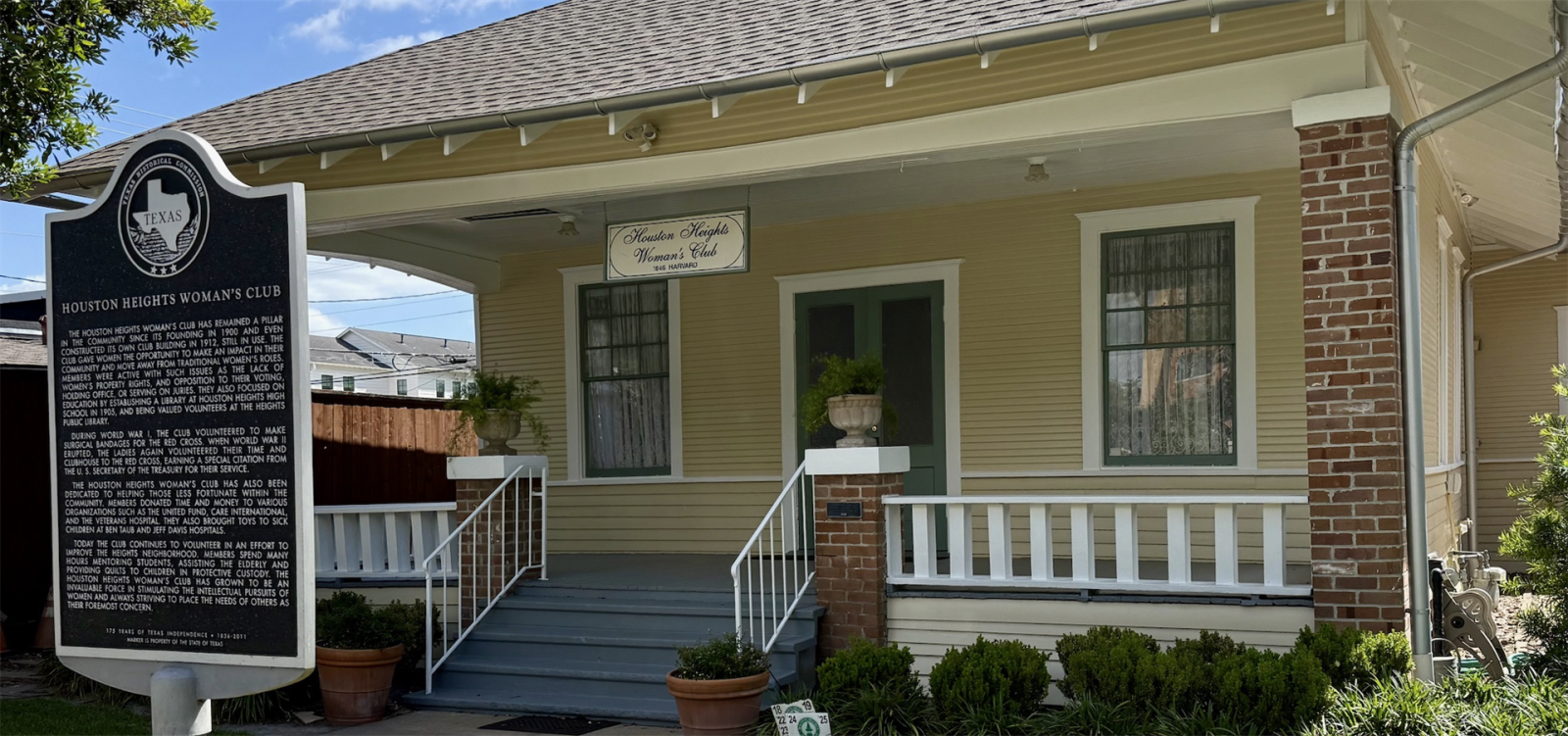
How a literary circle became a 125-year tradition of friendship, service and civic voice
By Lydia™ @Lydia.com
Houston Living · Approximately 5 minutes
On Harvard Street in the Houston Heights stands a modest cypress-sided building with a porch, tall windows and a room large enough for women to gather. It does not announce itself as a monument. Its importance lies in what generations have been able to do inside.
The Houston Heights Woman’s Club began in 1900 and opened its clubhouse in 1912. Before American women possessed the national vote, its members were studying books, building a library, discussing legal rights and learning how organized friendship could become civic influence.
Sixteen Women and a Literary Beginning
On January 15, 1900, sixteen women met in the home of Mrs. C. R. Cummings to form the Heights Literary Club. At a time when relatively few women attended university, collective reading offered intellectual life beyond the limits of household routine.
The women chose a motto: “Seek wisdom and strive to do good.” Within months, they began collecting small contributions to answer charitable needs. Literature was not abandoned; it became the beginning of a larger education in responsibility.
By 1905, under Pearl Dexter’s leadership, members raised money to establish a library at Heights High School. The club later expanded into departments devoted to music, civic needs, arts and crafts, social activity and literature. Its members had outgrown the parlors in which they first met.
Building Within Their Means
Helen and Daniel Denton Cooley donated a lot at 1846 Harvard in 1911. Club members organized a neighborhood carnival and theatrical events to raise construction money, then rejected a more elaborate $4,000 plan in favor of a building they could afford.
The clubhouse opened in 1912 with one principal meeting room and a high stage. The women supplied it department by department: a piano, curtains, a library table and folding chairs. The result was not grand, but it belonged to their purpose.
Its durable cypress siding remains, and the building is described by the club as Houston’s oldest clubhouse still in continuous use. Survival has required compromise and care, including a temporary transfer to the Heights Association when maintenance became difficult and its eventual return to the club.
A room becomes an institution when each generation leaves the door open for the next.
Learning the Language of Rights
At the first meeting in the new clubhouse, pioneering attorney Hortense Sparks Ward addressed the “Legal Status of Women in Texas.” The club’s 1912–1913 yearbook included four pages explaining married women’s rights concerning property, wills and divorce.
This was practical knowledge in a state where women faced opposition to voting, holding office and serving on juries. Five months after Ward’s talk, she stood beside the Texas governor as he signed a married women’s property-rights measure and handed her the pen.
The clubhouse was therefore more than a setting for polite culture. It was a place where women could understand the laws governing their lives and recognize that those laws could change.
Service Measured in Work
The club repeatedly translated fellowship into labor. Members supported schools and libraries, established an early Heights parent-teacher association and created a reading garden at the Heights Public Library.
During both world wars, social activity gave way to Red Cross work. In 1943 and 1944 alone, 2,669 volunteers used the clubhouse to produce more than 1.17 million surgical dressings.
The scale of service has changed, but the habit continues. The club reports that in 2024 members contributed 4,000 volunteer hours and more than $20,000 in community support, assisting students, food programs, older residents and women’s shelters. Its Hortense Ward Scholarship helps a Houston law student committed to public service and women’s causes.
A House Still Full of Voices
The early club was meaningful, but it was not universal. In segregated Houston, Black women created their own powerful networks for education, charity and civil rights, while other communities organized through separate clubs and mutual-aid societies. No single clubhouse can contain the whole history of Houston women.
What 1846 Harvard offers is one enduring example of how influence grows: women meet, exchange knowledge, divide work and return often enough for trust to become an institution. In 2025, the club unified its daytime and evening groups, adapting once again so different generations could participate together.
The clubhouse remains modest because its founders chose usefulness over display. More than a century later, that decision feels almost prophetic. Buildings survive when people need what happens inside them. The room these women made for themselves endures because they kept making room for friendship, learning and work beyond themselves.
Research & Sources
Houston Heights Woman’s Club — Main Site
houstonheightswomansclub.com
Houston Heights Woman’s Club — Club History
houstonheightswomansclub.com
Houston Heights Woman’s Club — Clubhouse History
houstonheightswomansclub.com
Houston Heights Woman’s Club — Community Impact
houstonheightswomansclub.com
Houston Heights Woman’s Club — Hortense Ward Scholarship
houstonheightswomansclub.com
Houston History Magazine — “Houston Heights Woman’s Club: Over 100 Years of Friendship and Philanthropy”
houstonhistorymagazine.org
University of Houston Special Collections — Houston Heights Woman’s Club Records, 1900–2004
txarchives.org
Harris County Historical Commission — Houston Heights Woman’s Club Marker
historicalcommission.harriscountytx.gov
National Park Service — Emergence of a National Black Women’s Club Movement
nps.gov
Lydia™ provides independent editorial commentary informed by the sources listed above.
Lydia™ Editorial Disclaimer
This article provides general cultural and educational commentary. Historical interpretation may evolve as archives and community knowledge develop. Membership, programs, scholarships, events, rentals and access arrangements may change. Consult the Houston Heights Woman’s Club’s official website for current information.