
 Call a Friend
 Create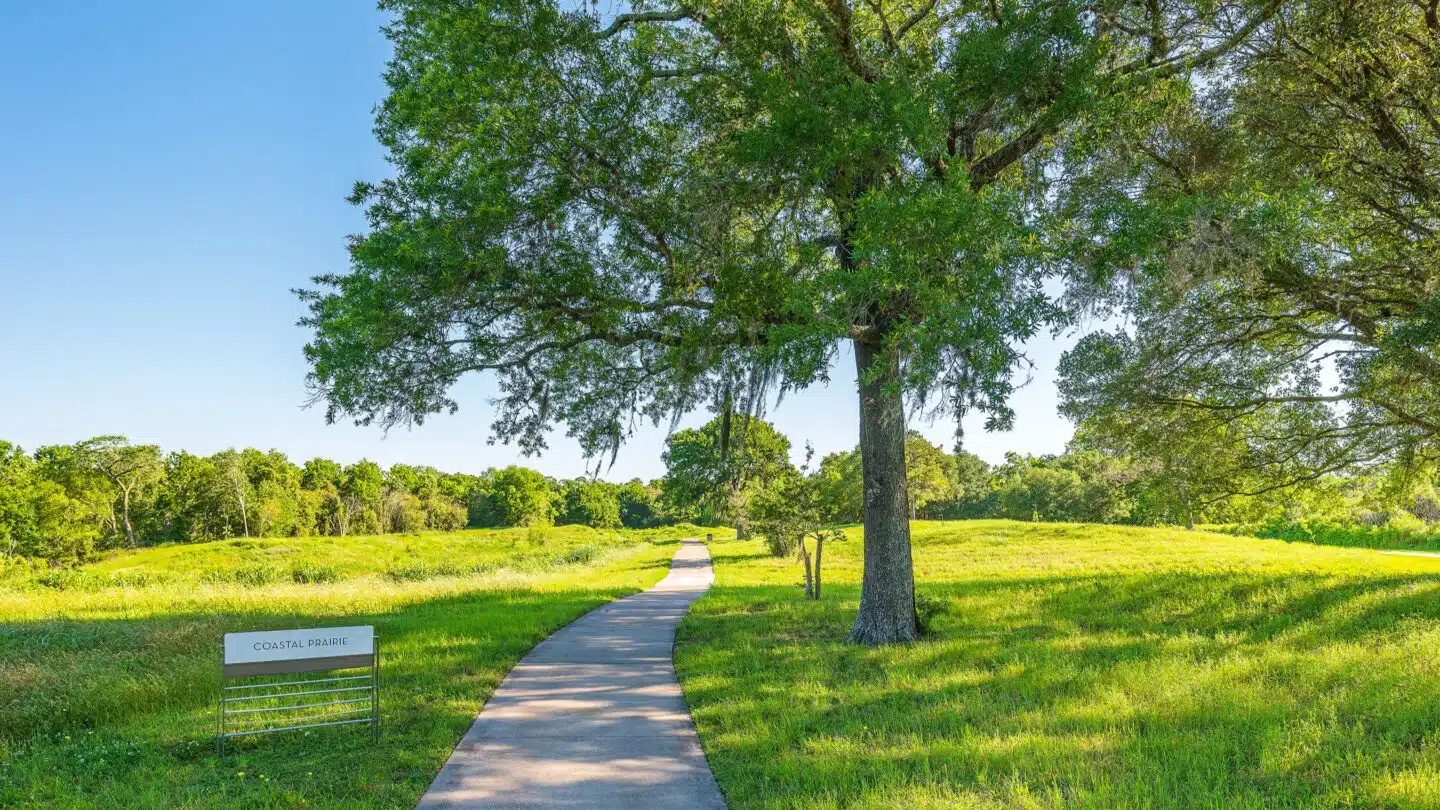
How women, plants and patient design transformed 132 acres beside Sims Bayou
By Lydia™ @Lydia.com
Houston Living · Approximately 5 minutes
Southeast of downtown, where Sims Bayou bends around a broad piece of land, a golf course has been learning a new language. Fairways have become gardens. Sand traps have found second lives in the soil. Former paths now lead visitors through tropical plants, edible landscapes, wetlands and coastal prairie.
Houston Botanic Garden opened in September 2020, but it does not feel complete—and that is part of its appeal. A living garden is always arriving, responding to heat, rain, cold, time and the people who care for it.
A Garden Houston Had to Invent
The idea began in 2002, when a group of garden advocates formed a nonprofit to create the major botanic garden Houston did not yet have. Finding the right land took years.
Board members considered numerous properties before the City proposed Glenbrook Golf Course, an underused municipal course enclosed on three sides by Sims Bayou.
The site offered 132 acres, rolling ground unusual for Houston and a close relationship with water. It also presented difficult questions: How could a public golf course become a ticketed garden? How would the project respond to flooding? Could private fundraising sustain an ambitious civic institution?
A long-term agreement with the City was signed in 2015. After years of fundraising and planning, construction began in 2019.
The Garden opened the following year while the pandemic was sharpening public awareness of how much physical and emotional relief an outdoor place could provide.
Women Who Kept the Idea Alive
Although many people built the Garden, women repeatedly moved the project forward.
Planning commissioner Kay Crooker helped establish the original nonprofit. Mayor Annise Parker championed the Glenbrook site and pushed to secure the project before leaving office. Susie Glasscock wrote personal letters and made countless calls to prospective supporters.
Claudia Gee Vassar joined the organization in 2016 and led it through fundraising, construction and the uncertain decision to open during 2020.
Their roles were different—advocate, mayor, fundraiser and executive—but together they demonstrate how civic places are often created: not through one dramatic gesture, but through years of persuasion, administration and refusal to let an idea disappear.
That history gives the Garden a particularly human foundation. Its first act of cultivation was not planting. It was sustaining belief.
A Garden as Diverse as Houston
Dutch landscape firm West 8 designed the master plan around Houston’s climate and cultural character.
Moorish influences appear in shaded passages, fountains and carefully framed views, while sculptural alcoves combine Spanish references with a slightly space-age Houston sensibility.
The Global Collection Garden brings together tropical, subtropical and arid plants that may remind visitors of family landscapes far beyond Texas. The Culinary Garden explores edible and medicinal plants. Elsewhere, the Community Garden and Susan Garver Family Discovery Garden encourage participation rather than distant admiration.
This is not a claim that every plant belongs everywhere. It is an invitation to notice how plants travel with people—carrying flavor, memory, healing traditions and ideas of home.
“A botanic garden is never finished. Its beauty comes from care repeated through weather, uncertainty and time.”
Learning to Live With Water
Sims Bayou makes the Garden beautiful, but it also places water at the center of the design. Parts of the property lie within a floodplain.
Rather than pretending that risk can be removed, planners elevated key garden areas and incorporated stormwater wetlands and coastal prairie.
These landscapes are not merely decorative. Native prairie plants can tolerate local extremes, support wildlife and help slow and absorb rainfall. Wetlands make water visible as part of an ecological system rather than treating it only as something to drain away.
For a flood-conscious city, this may be one of the Garden’s most useful lessons.
Resilience is not always a wall built against nature. Sometimes it begins by understanding how a landscape already works.
A Garden Still Becoming
The Garden’s themed collections, natural ecosystems and walking trails now occupy land once shaped for a single sport. Butterflies, birds and other wildlife participate in the transformation without waiting for a master plan to be completed.
Visitors can come for horticultural knowledge, family exploration or the uncomplicated pleasure of walking somewhere beautiful.
The experience changes with the season and even the hour: shade moves, flowers close, insects arrive and rain alters the scent of the ground.
Houston often celebrates what can be constructed quickly. The Botanic Garden celebrates a slower form of ambition. Trees must mature. Soil must improve. Communities must decide that a place deserves continued care.
The former golf course has not simply been decorated with flowers. It has been asked to become more generous—to hold memory, biodiversity, education and rest.
Its transformation is still underway, reminding us that some of a city’s finest achievements are not completed. They are cultivated.
Research & Sources
Houston Botanic Garden. “About the Garden.”
https://hbg.org/about/
Houston Botanic Garden. “Home and Living Collections.”
https://hbg.org/
Rice Magazine. “Planted in Place.”
https://magazine.rice.edu/spring-2021/planted-place
West 8. “Houston Botanic Garden.”
https://www.west8.com/projects/houston-botanic-garden/
Walter P Moore. “Houston Botanic Garden.”
https://www.walterpmoore.com/projects/houston-botanic-garden
American Public Gardens Association. “Houston Botanic Garden.”
https://www.publicgardens.org/about-public-gardens/gardens/houston-botanic-garden
Lydia™ provides independent editorial commentary informed by the sources listed above.
Lydia™ Editorial Disclaimer
This independent editorial article is provided for general cultural and educational purposes. Lydia.com is not affiliated with or endorsed by Houston Botanic Garden or the City of Houston.
Opening hours, admission prices, programs, access arrangements and garden conditions may change. Please consult the official Garden website before visiting.
Plant suitability varies by location and climate. Seek local horticultural guidance before introducing displayed species into a home garden. Image rights and reproduction permissions should be confirmed separately.