 Call a Friend
 Create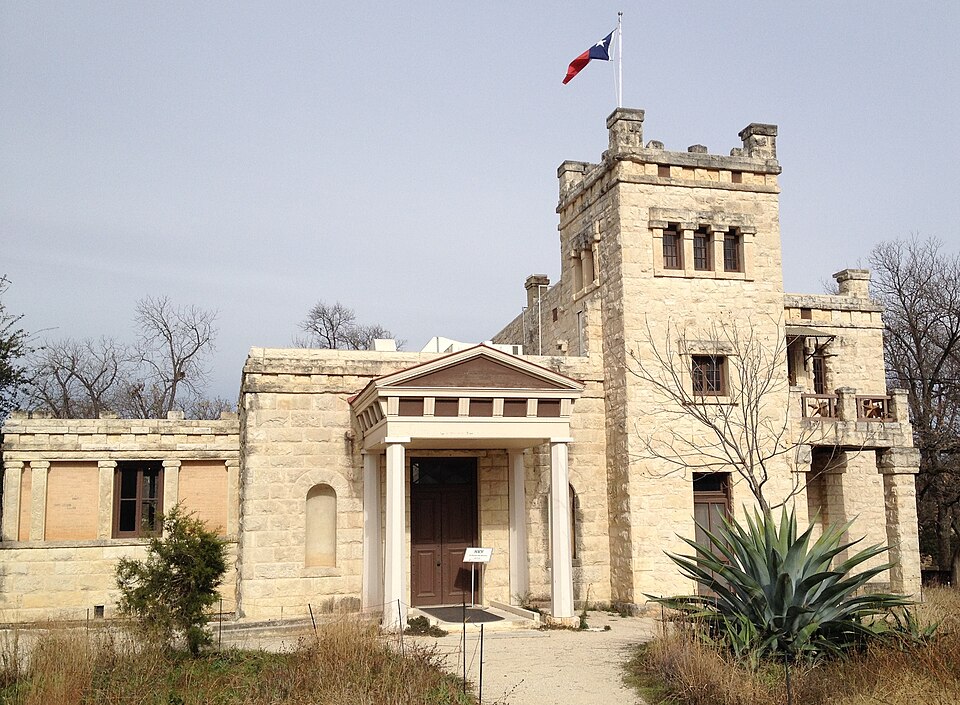
Elisabet Ney Museum: The Studio She Built for Freedom
Inside Formosa, where an unconventional sculptor shaped art, argument and an independent life
By Lydia™ @Lydia.com
Austin Living · Approximately 5 minutes
In Austin’s Hyde Park neighborhood, a small limestone building rises with the improbable air of a European castle. A tower, high windows and broad studio light distinguish it from the surrounding houses. Its name is Formosa, and it was built around one woman’s determination to work.
Elisabet Ney arrived in Texas with an accomplished European career behind her. When she created this Austin studio in the 1890s, she did more than resume sculpture. She designed a place where artistic concentration, political argument and personal independence could occupy the same rooms.
An Artist Before Texas
Born in Münster in 1833, Ney pursued sculpture when formal artistic training was largely closed to women. She overcame an initial rejection from Munich’s Academy of Fine Arts, graduated with high honors and continued her studies in Berlin under the celebrated sculptor Christian Daniel Rauch.
Her sitters included philosopher Arthur Schopenhauer, writer Jacob Grimm, Giuseppe Garibaldi, Otto von Bismarck and King Ludwig II of Bavaria. These were not polite accomplishments undertaken at society’s edges. Ney worked within the commanding tradition of public portraiture and persuaded powerful men to submit themselves to her gaze.
She married Scottish physician and philosopher Edmund Montgomery but retained her own name and guarded her professional identity. Their partnership, resources and intellectual companionship mattered, even as Ney resisted the conventions attached to marriage.
A Castle Made for Work
Ney and Montgomery came to Texas in the 1870s and settled at Liendo, a former cotton plantation near Hempstead. After years away from sculpture, a commission for statues of Stephen F. Austin and Sam Houston drew Ney back to Austin and public work.
In 1892 she acquired property north of the city and established Formosa. Completed the following year and later enlarged, it was among the earliest purpose-built art studios in Texas. Its tall working spaces accommodated monumental sculpture; its grounds and relative isolation protected concentration.
The building was not simply picturesque. It functioned as a self-portrait in stone: European in memory, Texan in material and arranged around the proposition that a woman’s work deserved architecture of its own.
Freedom becomes more durable when it is given a door, a roof and enough light in which to work.
Sculpting the Stories of Texas
At Formosa, Ney modeled the state’s founding heroes. Her figures of Austin and Houston became part of Texas’s official visual language, linking an immigrant woman artist to the creation of public memory.
That achievement also invites a modern question: who was granted monumental form, and who remained outside the frame? Ney’s subjects included military and political power, among them Confederate general Albert Sidney Johnston. Her own barrier-breaking life sat beside a nineteenth-century heroic tradition that museums now interpret more critically.
The tension is useful. It reminds us that women can challenge one hierarchy while still working within others—and that admiration need not require simplicity.
A Salon with the Doors Half Open
Formosa was both refuge and gathering place. Ney could refuse interruptions while sculpting, yet she also welcomed writers, politicians, educators and reformers for conversations about art, philosophy and public life.
Her civic voice extended beyond the studio. In 1907, shortly before her death, Ney joined other women testifying before a Texas legislative committee in support of woman suffrage.
After she died, friends including Ella Dancy Dibrell helped preserve Formosa. In 1911, women and other supporters gathered there to establish the Texas Fine Arts Association, the first statewide organization devoted to promoting art in Texas. The room Ney built for herself became infrastructure for other artists.
The Work of Preserving Independence
The City of Austin has operated the museum since 1941. Its collection includes the world’s largest body of Ney’s work, alongside her tools, furnishings and personal effects. Contemporary artists continue to enter into conversation with her legacy rather than leaving Formosa sealed in the nineteenth century.
The museum is currently closed for a major restoration and is expected to reopen in spring 2027. Repairs to the building, landscape and Waller Creek are being paired with a new interpretive plan and improved accessibility. Even a place built for independence depends upon collective care.
Formosa survives because Ney understood that creative life needs room, and because others recognized that the room itself mattered. Its lesson is not that every woman must build a castle. It is that serious work changes when it is treated as worthy of space—and that a city becomes richer when such spaces are protected for those still imagining what they might make.
Research & Sources
City of Austin — Elisabet Ney Museum
austintexas.gov
City of Austin — Museum Exhibits and Collection
austintexas.gov
Handbook of Texas — Elisabet Ney Museum
tshaonline.org
Humanities Texas — Elisabet Ney
humanitiestexas.org
National Park Service — Elisabet Ney
nps.gov
Smithsonian American Art Museum — Elisabet Ney
americanart.si.edu
PBS — Hidden from History: Elisabet Ney
pbs.org
Handbook of Texas — Woman Suffrage
tshaonline.org
Texas Historical Commission — Elisabet Ney Home
atlas.thc.texas.gov
City of Austin — Formosa Preservation Master Plan
services.austintexas.gov
Lydia™ provides independent editorial commentary informed by the sources listed above.
Lydia™ Editorial Disclaimer
This article provides general cultural and educational commentary. Historical interpretation may evolve as scholarship, collections and museum interpretation develop. The Elisabet Ney Museum is currently closed for renovation and anticipates reopening in spring 2027; schedules and access plans may change. Consult the City of Austin’s official museum page for current information.