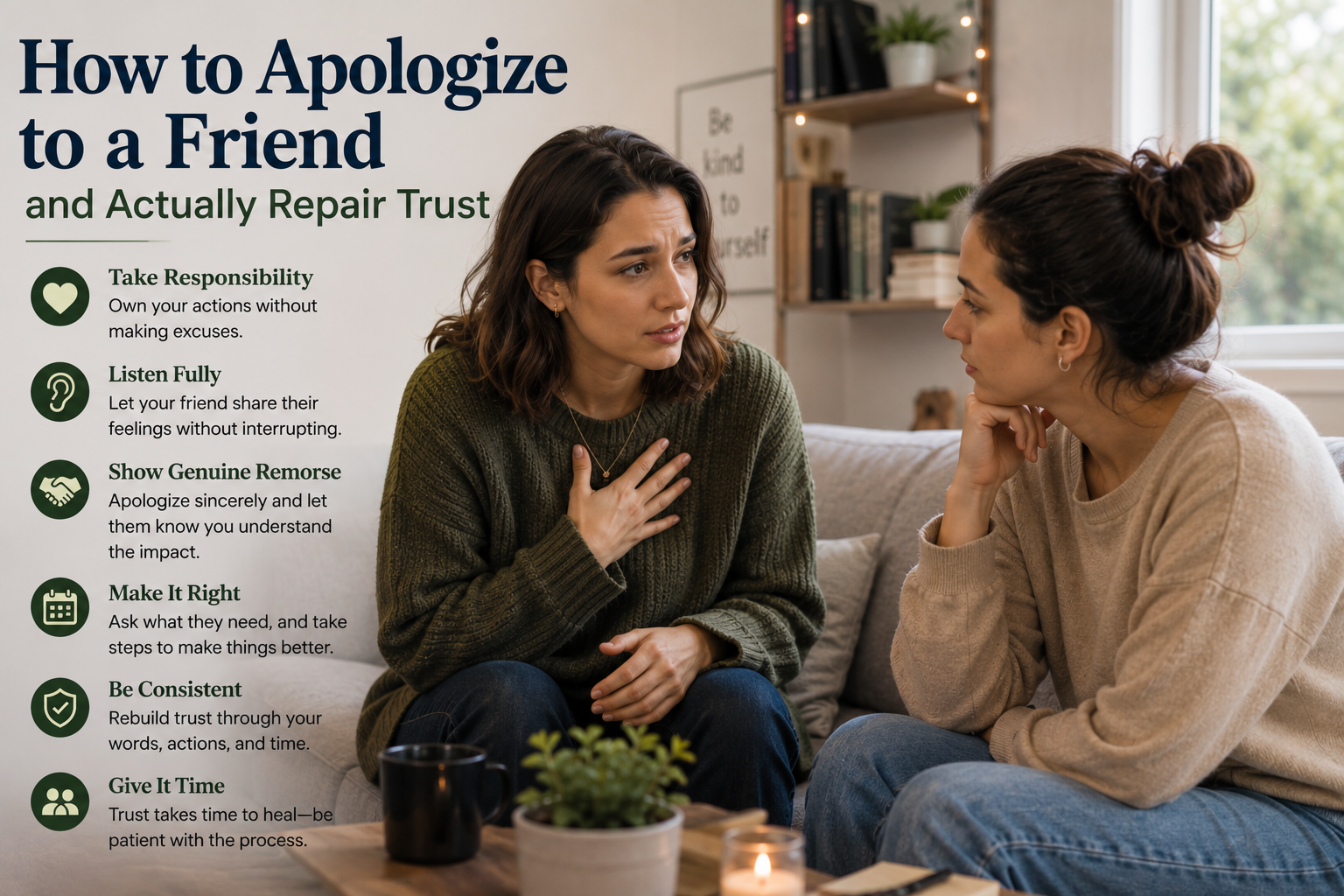
Friendships are built on trust, understanding, and shared experiences. But even the strongest friendships can experience moments of hurt.
Sometimes we say something we regret. Sometimes we fail to show up when a friend needed us. Sometimes our actions create distance, even when causing harm was never our intention.
When this happens, knowing how to apologize to a friend can make the difference between a relationship that slowly fades and one that grows stronger.
A meaningful apology is not just about finding the right words. It is about taking responsibility, understanding the impact of our actions, and showing through our behaviour that we value the friendship.
At Lydia™, we believe healthy friendships are not built on perfection. They are built on honesty, compassion, and the willingness to repair things when they go wrong.
When Does a Friendship Need a Real Apology?
Not every disagreement requires a major apology.
Friends naturally misunderstand each other. Different opinions, communication styles, and expectations can sometimes create tension.
However, a friendship may need a genuine apology when your actions have caused emotional harm or damaged trust.
Examples include:
A true apology is not about proving that you are a bad person.
It is about recognizing that your actions affected someone you care about.
Understanding this difference is an important part of relationship repair.
What Makes an Apology Feel Sincere?
A sincere apology has more depth than simply saying “I’m sorry.”
The most meaningful apologies usually include several important elements:
Acknowledge What Happened
The first step is recognizing the specific situation.
Instead of:
“I’m sorry things got weird.”
Try:
“I’m sorry I dismissed your feelings during our conversation.”
A clear acknowledgment shows that you understand what happened.
Take Responsibility
A meaningful apology does not focus on excuses.
Taking responsibility means recognizing your role without shifting blame.
For example:
“I should have communicated better.”
“I understand that my actions hurt you.”
This demonstrates emotional responsibility.
Recognize the Impact
One of the most important parts of an apology is understanding how your actions affected the other person.
Sometimes people focus only on their intentions:
“I didn’t mean to hurt you.”
While intentions matter, they are not the only part of the story.
A person can have good intentions and still cause pain.
Healthy apologies consider both:
This is often described as understanding impact vs intent.
Why Is “I’m Sorry You Felt Hurt” Not Enough?
Many people use phrases like:
“I’m sorry you felt that way.”
Although this may sound like an apology, it can unintentionally place responsibility on the other person’s feelings instead of acknowledging your actions.
The message can feel like:
“The problem is your reaction, not what I did.”
A stronger apology focuses on accountability.
Instead of:
“I’m sorry you felt hurt.”
Try:
“I’m sorry my words hurt you. I understand why that affected you.”
The difference is small, but the emotional impact is significant.
A genuine apology helps the other person feel seen and understood.
How Do You Apologize to a Friend Without Sounding Defensive?
When emotions are involved, it can be tempting to explain yourself immediately.
You may want to say:
“But I was stressed.”
“But that wasn’t what I meant.”
“But you also…”
While context can be important, adding explanations too quickly can make an apology feel like a defense.
When offering a sincere apology to a friend, try focusing first on understanding.
A helpful structure is:
For example:
“I realize I hurt you when I didn’t support you during that time. I understand why you felt disappointed, and I’m sorry. I want to be more thoughtful and present moving forward.”
This type of apology creates space for trust to begin rebuilding.
How Do You Repair Trust After Apologizing?
An apology can open the door to healing, but rebuilding trust usually requires more than words.
Trust repair happens through consistent actions over time.
This may include:
Following Through on Promises
If you say you want to do better, your actions need to reflect that.
Small changes often matter more than dramatic promises.
Communicating More Honestly
Many friendship conflicts grow because feelings remain unspoken.
Better communication can prevent similar situations in the future.
Respecting Your Friend’s Feelings
Your friend may need time to process the apology.
Avoid expecting immediate forgiveness.
A person can appreciate your apology while still needing space to heal.
Showing Changed Behaviour
The strongest apology is often a changed pattern.
When someone sees that your actions match your words, trust can gradually return.
What If Your Friend Is Not Ready to Forgive?
One of the hardest parts of apologizing is accepting that forgiveness cannot be demanded.
You can control:
You cannot control:
A respectful apology gives the other person freedom to respond in their own way.
Sometimes trust takes time.
Sometimes a friendship needs a new version of itself.
Sometimes both people decide to move forward separately.
All of these outcomes can happen while still honoring the relationship.
Should You Apologize Again If a Friend Does Not Respond?
If you have already offered a genuine apology, repeatedly reaching out may create more pressure.
Your friend may need emotional space.
A thoughtful approach is to allow time while making it clear that you are open to conversation.
For example:
“I understand if you need space. I want you to know that I’m sorry, and I’m here if you ever want to talk.”
This communicates care without demanding a response.
An apology is an offering, not a request for immediate comfort.
How Can Friendship Conflict Become an Opportunity for Growth?
Many people see conflict as a sign that a friendship is failing.
But conflict can sometimes reveal areas where a relationship needs more understanding.
A friendship becomes stronger when both people learn how to:
A repaired friendship can sometimes become stronger than before because both people understand each other better.
The goal is not to avoid every mistake.
The goal is to create a relationship where mistakes can be acknowledged and repaired.
Why Accountability Matters in Strong Friendships
Accountability is not about blaming yourself for everything.
It is about having the emotional maturity to say:
“I played a part in this.”
Strong friendships require both people to recognize their impact on each other.
When someone takes responsibility without excuses, it creates safety.
A friend feels more comfortable being honest because they know their feelings will be respected.
This is the foundation of long-term connection.
A Real Apology Can Strengthen a Friendship
Friendships are not meaningful because they are perfect.
They are meaningful because two people choose to care even when things become difficult.
Knowing how to apologize to a friend is an important part of maintaining healthy relationships.
A thoughtful apology does not erase what happened.
It acknowledges it.
It does not demand forgiveness.
It creates an opportunity for healing.
And it does not simply say:
“I’m sorry.”
It communicates:
“Our friendship matters enough for me to do better.”
Frequently Asked Questions
What is the best way to apologize to a friend?
The best apology is honest, specific, and focused on accountability. Acknowledge what happened, recognize the impact, and show that you are willing to change.
How do you rebuild trust after hurting a friend?
Trust is rebuilt through consistent actions, honest communication, patience, and demonstrating changed behaviour over time.
Should you apologize again if a friend does not respond?
If you have already given a sincere apology, it is usually best to give your friend space while remaining open to future communication.
How do you apologize without making excuses?
Focus on acknowledging your actions and their impact before explaining your perspective. An apology should prioritize understanding rather than defending yourself.
Can a friendship recover after a serious conflict?
Yes, many friendships can recover when both people are willing to communicate openly, take responsibility, and rebuild trust.
Continue Building Stronger Friendships With Lydia™
Every meaningful friendship experiences challenges. What matters is how we respond when those moments happen.
Lydia™ encourages thoughtful conversations where women can reflect, connect, and build relationships based on understanding and respect.
Choose accountability over the perfect wording, then give the other person room to respond.
Friendships are built on trust, understanding, and shared experiences. But even the strongest friendships can experience moments of hurt.
Sometimes we say something we regret. Sometimes we fail to show up when a friend needed us. Sometimes our actions create distance, even when causing harm was never our intention.
When this happens, knowing how to apologize to a friend can make the difference between a relationship that slowly fades and one that grows stronger.
A meaningful apology is not just about finding the right words. It is about taking responsibility, understanding the impact of our actions, and showing through our behaviour that we value the friendship.
At Lydia™, we believe healthy friendships are not built on perfection. They are built on honesty, compassion, and the willingness to repair things when they go wrong.
When Does a Friendship Need a Real Apology?
Not every disagreement requires a major apology.
Friends naturally misunderstand each other. Different opinions, communication styles, and expectations can sometimes create tension.
However, a friendship may need a genuine apology when your actions have caused emotional harm or damaged trust.
Examples include:
A true apology is not about proving that you are a bad person.
It is about recognizing that your actions affected someone you care about.
Understanding this difference is an important part of relationship repair.
What Makes an Apology Feel Sincere?
A sincere apology has more depth than simply saying “I’m sorry.”
The most meaningful apologies usually include several important elements:
Acknowledge What Happened
The first step is recognizing the specific situation.
Instead of:
“I’m sorry things got weird.”
Try:
“I’m sorry I dismissed your feelings during our conversation.”
A clear acknowledgment shows that you understand what happened.
Take Responsibility
A meaningful apology does not focus on excuses.
Taking responsibility means recognizing your role without shifting blame.
For example:
“I should have communicated better.”
“I understand that my actions hurt you.”
This demonstrates emotional responsibility.
Recognize the Impact
One of the most important parts of an apology is understanding how your actions affected the other person.
Sometimes people focus only on their intentions:
“I didn’t mean to hurt you.”
While intentions matter, they are not the only part of the story.
A person can have good intentions and still cause pain.
Healthy apologies consider both:
This is often described as understanding impact vs intent.
Why Is “I’m Sorry You Felt Hurt” Not Enough?

 Call a Friend
 Create