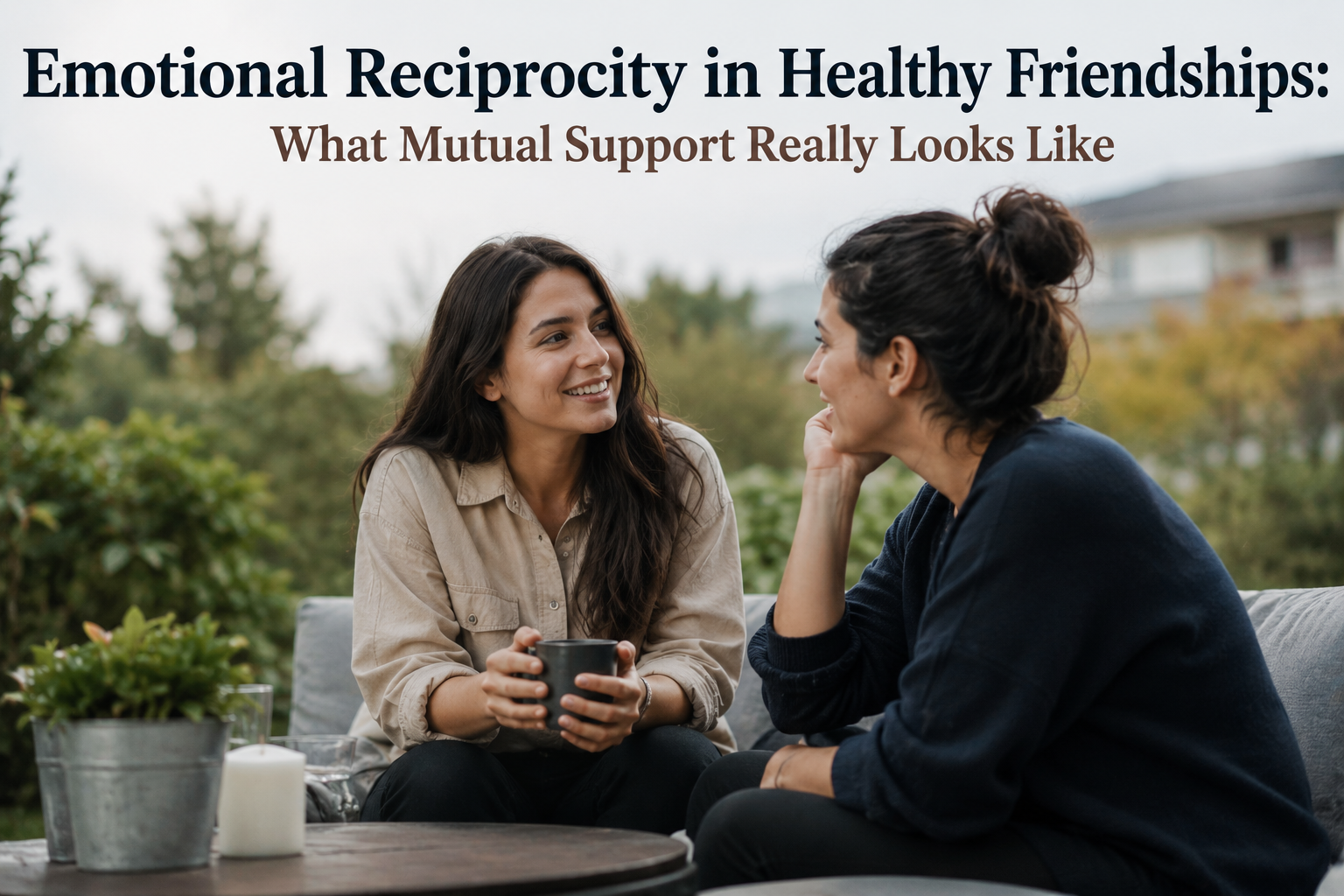
Friendships often feel effortless when both people feel seen, heard, and valued. There is a natural exchange of care — one person listens when the other needs support, encouragement is shared, and both people feel comfortable being themselves.
But many women quietly wonder:
“Am I putting more effort into this friendship than they are?”
“Do they care about my life as much as I care about theirs?”
“Is it normal for one person to need more support sometimes?”
These questions are connected to an important part of healthy friendships: emotional reciprocity.
Emotional reciprocity does not mean every conversation, favor, or moment of support must be perfectly equal. Friendships are not transactions. Instead, it refers to the feeling that care, interest, and emotional effort flow in both directions over time.
At Lydia™, we believe meaningful friendships are built through understanding, empathy, and genuine connection. A strong friendship is not about keeping score — it is about knowing that both people matter.
What Does Emotional Reciprocity Mean in Friendship?
Emotional reciprocity in friendship means that both people contribute to the emotional health of the relationship.
It involves a balance of:
A reciprocal friendship does not require identical personalities or identical communication styles.
One friend may naturally express care through words. Another may show support by helping, checking in, or simply being present during difficult moments.
The important question is not:
“Do we support each other in exactly the same way?”
The better question is:
“Do both people feel valued and cared for in this relationship?”
That sense of mutuality is what creates emotional security.
Does a Healthy Friendship Have to Be 50/50?
A common misunderstanding about friendships is that everything should always be equal.
However, real life does not work that way.
There are seasons when one person may need more support than the other.
A friend going through a difficult time may need more attention, patience, and encouragement. Later, that same friend may become the person offering support when circumstances change.
A healthy friendship is not always 50/50 in every moment.
Instead, it is about balanced friendship over time.
Think of friendship as a shared journey. Sometimes one person walks faster and the other slows down. Sometimes one person needs a hand. What matters is that both people are willing to show up.
The problem is not temporary imbalance.
The problem is when one person consistently gives while the other consistently takes.
What Does Mutual Emotional Support Look Like?
Mutual support in friendship can appear in many different ways.
It is often found in small, everyday actions:
Listening With Genuine Interest
A supportive friend does not just wait for their turn to speak.
They listen.
They ask questions.
They remember important details.
Active listening shows that someone’s thoughts and feelings matter.
Celebrating Each Other’s Wins
A healthy friendship includes happiness for each other’s achievements.
Whether it is a career milestone, personal goal, family moment, or small victory, a supportive friend can celebrate without comparison or jealousy.
Being Present During Difficult Times
Support does not mean having all the answers.
Sometimes it simply means saying:
“I’m here for you.”
A friend who provides emotional availability creates a sense of safety and trust.
Sharing Vulnerability
Strong friendships allow both people to open up.
When both friends can share fears, hopes, challenges, and experiences, the relationship becomes deeper and more authentic.
What Are Signs of a Balanced Friendship?
A friendship with strong emotional reciprocity often feels comfortable and natural.
Signs of a balanced friendship include:
A balanced friendship does not mean every interaction is identical.
It means both people experience the relationship as meaningful.
You should not feel like you have to constantly prove your value, earn attention, or carry the entire emotional responsibility of the friendship.
How Can You Tell a Temporary Imbalance From a Pattern?
Every friendship experiences moments of imbalance.
A friend may become less available because of:
These situations do not automatically mean a friendship is unhealthy.
The difference between a temporary imbalance and a long-term pattern often comes down to awareness and effort.
Ask yourself:
A temporary imbalance usually includes understanding and adjustment.
A repeated lack of care, interest, or effort may indicate a deeper issue.
What Happens When Emotional Reciprocity Is Missing?
When a friendship lacks balance, one person may begin feeling emotionally exhausted.
They may feel like they are always:
Over time, this can create frustration and disappointment.
A friendship should feel supportive, not like a responsibility carried by one person.
Lack of reciprocity does not always mean the other person does not care. Some people struggle with communication, emotional expression, or recognizing what others need.
However, healthy friendships require awareness from both sides.
How Can Friends Create More Reciprocity Without Keeping Score?
Creating more emotional give and take does not mean tracking who called first or who helped more.
Keeping score can turn friendship into a competition.
Instead, focus on creating more awareness.
Here are some ways to encourage reciprocity:
Communicate Your Needs
People cannot always understand what we need unless we express it.
Instead of feeling disappointed silently, try sharing your feelings.
For example:
“I’ve missed talking with you lately. I would love for us to make more time to catch up.”
Ask More Meaningful Questions
Deep friendships grow through curiosity.
Instead of only discussing daily updates, ask questions like:
Notice How Your Friend Shows Care
Not everyone expresses friendship in the same way.
Some people send messages frequently. Others show love through actions, reliability, or being present when needed.
Understanding different communication styles can strengthen connection.
Can a Friendship Be Healthy If One Person Needs More Support?
Yes.
Healthy friendships can handle different seasons of need.
A friend experiencing grief, stress, change, or uncertainty may temporarily require more emotional support.
The key is whether there is care and awareness in both directions.
Even if one person needs more support at a certain time, the relationship can still feel balanced when both people appreciate each other and remain emotionally connected.
Healthy friendships allow people to be human.
They make room for changing circumstances while maintaining mutual respect.
Why Emotional Availability Matters in Friendship
Emotional availability is the ability to be present, open, and responsive in a relationship.
Friends who are emotionally available create space for honest conversations.
They do not have to solve every problem.
They simply show that they care.
This creates trust.
Over time, emotional availability helps friendships become places where people feel understood rather than judged.
Building Friendships Where Both People Feel Valued
The strongest friendships are not built on perfection.
They are built on effort.
They grow when two people are willing to listen, communicate, and care about each other’s experiences.
Emotional reciprocity in friendship is not about demanding equal effort every single day. It is about creating a relationship where both people feel important.
A meaningful friendship should allow you to give freely while also feeling supported when you need care.
Because friendship is not only about having someone beside you.
It is about knowing someone is truly there with you.
Frequently Asked Questions
What is reciprocity in a friendship?
Reciprocity in friendship means that both people contribute care, attention, support, and effort to maintain a meaningful connection.
Can a friendship be healthy if one person needs more support?
Yes. Friendships naturally go through different seasons. A healthy friendship can handle temporary differences in support when both people remain caring and respectful.
What are signs of a balanced friendship?
Signs include mutual effort, active listening, emotional support, respect for boundaries, and both people feeling valued.
How do you know if a friendship lacks emotional reciprocity?
A friendship may lack reciprocity if one person consistently gives support while the other rarely shows interest, effort, or care over time.
How can you improve emotional reciprocity in a friendship?
Open communication, honest conversations, and understanding each other’s ways of showing care can help create a more balanced friendship.
Explore More Meaningful Connections With Lydia™
The friendships that shape our lives are built through understanding, care, and authentic conversations.
Lydia™ offers a thoughtful space where women can reflect on relationships, share experiences, and discover connections that feel genuine.
Reflect on the relationships that help you feel seen, heard, and valued.

 Call a Friend
 Create